Comparing Pilates and Barre for Core Strength
Strengthen your core by comparing Pilates and Barre workouts. Discover which method best suits your fitness preferences.
Strengthen your core by comparing Pilates and Barre workouts. Discover which method best suits your fitness preferences.
Comparing Pilates and Barre for Core Strength
Pilates vs Barre Understanding the Core Concepts
Alright, let's dive deep into two of the most popular fitness methods out there for building a rock-solid core: Pilates and Barre. You've probably heard of both, maybe even tried one or the other, but do you really know the fundamental differences and which one might be your perfect match for core strength and overall fitness? We're going to break it all down, from their origins and philosophies to the nitty-gritty of their movements, benefits, and even some specific product recommendations to enhance your practice.
At its heart, both Pilates and Barre are fantastic for developing core strength, flexibility, and muscular endurance. They both emphasize controlled movements, proper alignment, and a strong mind-body connection. However, they approach these goals from slightly different angles, drawing from distinct historical backgrounds and exercise principles.
Pilates The Foundation of Core Stability and Control
Pilates, developed by Joseph Pilates in the early 20th century, was originally called 'Contrology.' This name itself tells you a lot about its philosophy: it's all about control. Joseph Pilates designed his method to rehabilitate injured soldiers and dancers, focusing on strengthening the 'powerhouse' – the core muscles including the abdominals, lower back, hips, and glutes. The six core principles of Pilates are Centering, Concentration, Control, Precision, Breath, and Flow.
Pilates Equipment and Mat Work Exploring Your Options
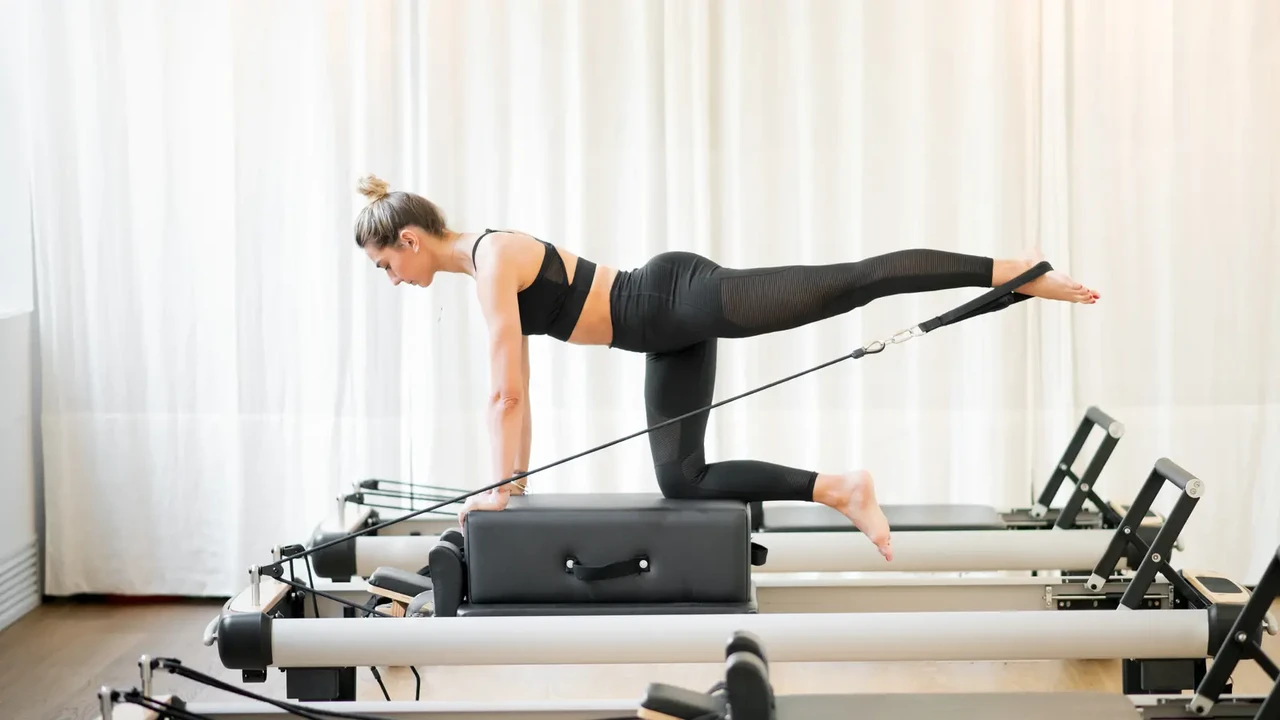
Pilates can be practiced on a mat (Mat Pilates) or using specialized equipment like the Reformer, Cadillac, Chair, and Barrel. Mat Pilates relies solely on your body weight and gravity, making it incredibly accessible. Equipment Pilates, particularly on the Reformer, uses springs and pulleys to provide resistance and assistance, allowing for a wider range of exercises and targeted muscle engagement.
The focus in Pilates is on slow, precise movements, engaging deep core muscles, and maintaining proper spinal alignment. It's not about high reps or heavy weights; it's about quality over quantity. This makes it excellent for improving posture, preventing injuries, and rehabilitating existing ones. Many athletes use Pilates to enhance their performance by building a stable and strong core, which is the foundation for all movement.
Benefits of Pilates for Core Strength and Beyond
- Deep Core Engagement: Pilates specifically targets the transverse abdominis, the deepest abdominal muscle, which acts like a natural corset for your spine.
- Improved Posture: By strengthening your core and back muscles, Pilates helps correct postural imbalances.
- Increased Flexibility and Mobility: Many Pilates exercises involve lengthening and stretching muscles, improving overall range of motion.
- Injury Prevention and Rehabilitation: Its low-impact nature and focus on controlled movement make it ideal for those recovering from injuries or looking to prevent them.
- Enhanced Body Awareness: The emphasis on mind-body connection helps you understand how your body moves and where your strength comes from.
Barre The Dance Inspired Path to Sculpted Muscles
Barre, on the other hand, draws heavily from ballet, incorporating elements of Pilates, yoga, and strength training. It originated in the 1950s when Lotte Berk, a German dancer, developed a method to rehabilitate her back injury by combining her dance training with rehabilitative therapy. Barre classes typically involve a ballet barre (hence the name), light weights, resistance bands, and small exercise balls.
Barre Class Structure What to Expect
A typical Barre class starts with a warm-up, followed by a series of exercises at the barre focusing on small, isometric movements (tiny pulses and holds) that target specific muscle groups, particularly the glutes, thighs, and core. You'll often hear instructors talk about 'tucking' or 'squeezing' – these are cues to engage those deep stabilizing muscles. The class usually includes upper body work with light weights and finishes with core work on the mat and stretching.
Barre is known for creating long, lean muscles and improving muscular endurance. While it might look easy from the outside, those tiny movements create an intense burn, leading to significant strength gains and improved muscle tone. It's a high-energy, low-impact workout that can be incredibly challenging.
Benefits of Barre for Core and Overall Fitness
- Muscular Endurance: The high repetitions and isometric holds build incredible stamina in your muscles.
- Targeted Muscle Sculpting: Barre excels at isolating and working specific muscle groups, leading to a toned physique.
- Improved Balance and Stability: Many exercises require balance, which strengthens stabilizing muscles, including those in your core.
- Increased Flexibility: Like Pilates, Barre incorporates stretching to improve range of motion.
- Cardiovascular Benefits: While low-impact, the continuous movement and high reps can elevate your heart rate.
Pilates vs Barre A Head to Head Comparison for Core Strength
So, which one is better for core strength? The truth is, both are excellent, but they emphasize different aspects of core training. Pilates focuses on deep, intrinsic core stability and control, building strength from the inside out. It's about creating a strong, stable foundation for all movement. Barre, while also engaging the core, often uses it as a stabilizer while other muscle groups (like the glutes and thighs) are working intensely. The core work in Barre tends to be more dynamic and focused on endurance.
If your primary goal is rehabilitation, improving posture, or developing a deep understanding of your body's core mechanics, Pilates might be your go-to. If you're looking for a high-energy workout that sculpts muscles, improves endurance, and has a strong aesthetic component, Barre could be more up your alley. Many people find that combining elements of both, or alternating between them, provides a well-rounded fitness routine.
Essential Gear Enhancing Your Pilates and Barre Practice
To get the most out of your Pilates and Barre workouts, especially if you're practicing at home, having the right gear can make a huge difference. Here are some top recommendations, including specific products, their uses, and price ranges.
Pilates Essentials Must Have Equipment
1. Pilates Mat The Foundation of Your Practice
A good Pilates mat is thicker than a standard yoga mat, providing more cushioning for your spine and joints during floor exercises. This extra padding is crucial for comfort and support, especially during exercises that involve rolling or lying on your back.
- Product Recommendation: Balanced Body Pilates Mat
- Use Case: Perfect for all mat Pilates exercises, providing superior cushioning and grip. Ideal for home practice or studio use.
- Features: Often made from high-density foam, non-slip surface, durable.
- Price Range: $60 - $120 USD
- Why it's great: Balanced Body is a reputable brand in the Pilates world, known for quality and durability. This mat will last you a long time and provide excellent support.
2. Resistance Bands Adding Challenge and Support
Resistance bands are incredibly versatile for both Pilates and Barre. They can add challenge to exercises, help with stretching, or even provide assistance for certain movements. They come in various resistance levels, from light to heavy.
- Product Recommendation: TheraBand Resistance Band Set (Loop Bands and Long Bands)
- Use Case: Enhancing leg and arm exercises, adding resistance to core work, assisting stretches. Great for travel.
- Features: Latex-free options available, color-coded for different resistance levels, durable.
- Price Range: $15 - $40 USD for a set.
- Why it's great: TheraBand is a trusted name in physical therapy and fitness. Their bands are reliable and come in a good range of resistances to grow with you.
3. Pilates Ring Magic Circle Enhancing Core and Inner Thighs
The Pilates Ring, often called a Magic Circle, is a lightweight, flexible ring with padded handles. It's used to provide resistance, particularly for inner and outer thigh work, arm exercises, and core engagement.
- Product Recommendation: STOTT PILATES Resistance Ring Pro
- Use Case: Deepening core engagement, strengthening inner thighs, sculpting arms and shoulders.
- Features: Durable construction, comfortable padded grips, consistent resistance.
- Price Range: $30 - $50 USD
- Why it's great: STOTT PILATES is another leading brand, and their ring offers excellent quality and resistance, making it a valuable addition to your mat practice.
Barre Essentials Sculpting and Toning Tools
1. Ballet Barre Portable or Wall Mounted
While many Barre studios have fixed barres, a portable or wall-mounted barre is essential for home practice. It provides stability and support for balance-focused exercises and stretches.
- Product Recommendation (Portable): Vita Vibe Portable Ballet Barre
- Use Case: Home Barre workouts, providing stability for balance and support for leg and glute exercises.
- Features: Adjustable height, sturdy construction (often aluminum or steel), easy to assemble and disassemble.
- Price Range: $100 - $250 USD
- Why it's great: Vita Vibe is well-regarded for its sturdy and reliable portable barres, perfect for dedicated home practitioners.
2. Light Hand Weights Adding Resistance to Sculpt
Barre classes typically use very light hand weights (1-3 lbs) for high-repetition upper body work. The goal isn't to build bulk, but to sculpt and tone through endurance.
- Product Recommendation: CAP Barbell Neoprene Dumbbell Set (1, 2, 3 lb pairs)
- Use Case: Upper body sculpting, adding resistance to arm and shoulder exercises without bulking up.
- Features: Neoprene coating for comfortable grip, hexagonal shape to prevent rolling.
- Price Range: $20 - $40 USD for a set of pairs.
- Why it's great: These are standard, reliable light weights that are comfortable to hold during high-rep movements.
3. Small Exercise Ball The Squeeze and Support Tool
A small, inflatable exercise ball (often 8-10 inches in diameter) is a staple in Barre. It's used for inner thigh squeezes, core work, and support during certain exercises.
- Product Recommendation: Gaiam Core Stability Ball (8-9 inch)
- Use Case: Inner thigh work, core stabilization, glute activation, and support for lower back during mat exercises.
- Features: Anti-burst material, easy to inflate/deflate, non-slip surface.
- Price Range: $10 - $20 USD
- Why it's great: Gaiam is a popular brand for yoga and fitness accessories, and their small balls are durable and effective for Barre workouts.
4. Grippy Socks Essential for Safety and Stability
Both Pilates and Barre are often practiced barefoot or with grippy socks. These socks have silicone grips on the sole to prevent slipping, especially on smooth studio floors or mats.
- Product Recommendation: Tavi Noir Savvy Grip Socks
- Use Case: Providing grip and stability during all Pilates and Barre exercises, preventing slips and enhancing performance.
- Features: Arch support, comfortable fit, durable silicone grips, various styles (full toe, half toe).
- Price Range: $14 - $20 USD per pair.
- Why it's great: Tavi Noir is a leading brand in grip socks, known for their comfort, style, and superior grip, making them a favorite among practitioners.
Integrating Pilates and Barre for Holistic Core Development
Ultimately, the choice between Pilates and Barre, or even combining them, depends on your personal fitness goals, preferences, and what feels best for your body. Both offer incredible benefits for core strength, body awareness, and overall fitness.
If you're new to fitness or recovering from an injury, Pilates might be a gentler entry point, focusing on fundamental movements and building a strong, stable base. If you love the energy of a group class, enjoy dance-inspired movements, and want to sculpt and tone with high reps, Barre could be incredibly rewarding.
Many fitness enthusiasts find that incorporating both into their routine provides a comprehensive approach to core strength and full-body conditioning. For example, you might do Pilates twice a week for deep core work and flexibility, and Barre once or twice a week for muscular endurance and sculpting. Listen to your body, experiment with both, and see which method truly resonates with you and helps you achieve your fitness aspirations.
Remember, consistency is key. Whether you choose Pilates, Barre, or a combination, sticking with your practice will yield the best results for a strong, resilient core and a healthier, more balanced you.
:max_bytes(150000):strip_icc()/277019-baked-pork-chops-with-cream-of-mushroom-soup-DDMFS-beauty-4x3-BG-7505-5762b731cf30447d9cbbbbbf387beafa.jpg)