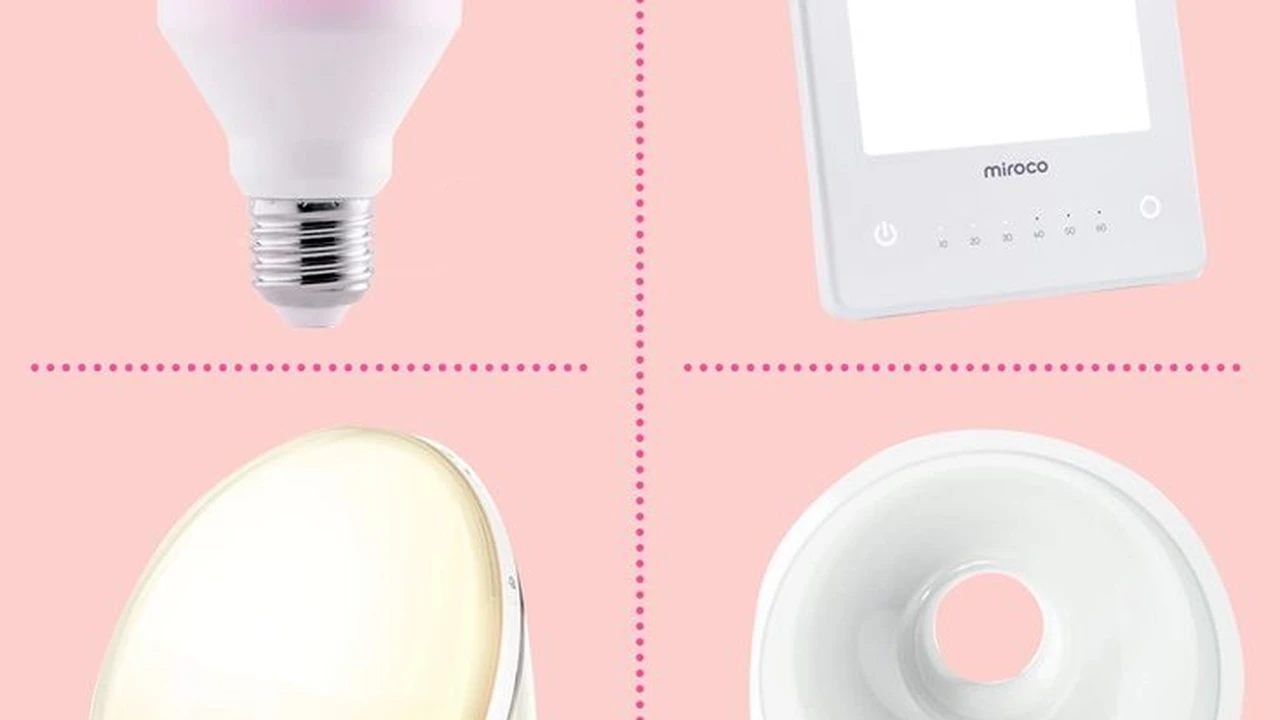
Top 4 Smart Lighting Solutions for Circadian Rhythm
Regulate your circadian rhythm with the top four smart lighting solutions. Optimize your sleep-wake cycle naturally.

Regulate your circadian rhythm with the top four smart lighting solutions. Optimize your sleep-wake cycle naturally.
Top 4 Smart Lighting Solutions for Circadian Rhythm
Hey there, biohackers and wellness enthusiasts! Ever feel like your energy levels are all over the place, or you're struggling to get a good night's sleep? A big part of that could be your circadian rhythm – your body's internal 24-hour clock that dictates when you feel awake and when you feel sleepy. And guess what plays a massive role in setting that clock? Light! Not just any light, but the right kind of light at the right time. That's where smart lighting solutions come in. They're not just about convenience; they're powerful tools for optimizing your health and well-being. Let's dive into the top four smart lighting solutions that can seriously biohack your sleep-wake cycle.
Understanding Circadian Rhythm and Light Exposure
Before we jump into the tech, let's quickly chat about why light is so crucial for your circadian rhythm. Our bodies evolved under the natural light-dark cycle of the sun. Bright, blue-rich light in the morning signals to our brains that it's daytime, boosting alertness and suppressing melatonin (the sleep hormone). As the day progresses, natural light becomes warmer and less intense. In the evening, the absence of bright light, especially blue light, signals to our bodies that it's time to wind down and produce melatonin, preparing us for sleep.
The problem in our modern world? We're constantly exposed to artificial light, often rich in blue wavelengths, even late at night from screens and overhead lights. This messes with our natural rhythm, telling our brains it's still daytime when it should be preparing for sleep. The result? Poor sleep quality, reduced energy, and a host of other health issues. Smart lighting aims to mimic natural light patterns, supporting your body's innate clock.
Solution 1 Philips Hue Smart Lighting System for Dynamic Light Control
When it comes to smart lighting, Philips Hue is often the first name that comes to mind, and for good reason. It's a comprehensive and incredibly versatile system that offers dynamic light control, making it perfect for circadian rhythm optimization.
What is Philips Hue and How Does it Work?
Philips Hue uses smart LED bulbs, light strips, and fixtures that connect to a central 'Bridge' (a hub that connects to your Wi-Fi router). You control everything through the Philips Hue app on your smartphone or tablet, or via voice assistants like Amazon Alexa, Google Assistant, and Apple HomeKit. The magic for circadian rhythm lies in its ability to change color temperature and brightness throughout the day.
Key Features for Circadian Rhythm Optimization
- Tunable White Light: This is huge. Hue bulbs can shift from cool, bright white (like daylight) to warm, dim amber (like a sunset). You can program them to automatically adjust throughout the day.
- Pre-set Routines: The app offers pre-set 'Routines' like 'Wake Up' (gradually brightens with cool light) and 'Go to Sleep' (gradually dims with warm light). You can also create custom routines.
- Full Color Spectrum: While tunable white is key for circadian rhythm, the full color spectrum allows for mood lighting and other creative uses, which can indirectly support well-being.
- Geofencing: Lights can turn on/off or adjust based on your location, so your home is always lit appropriately when you arrive or leave.
- Integration: Works seamlessly with a vast ecosystem of smart home devices and platforms.
Specific Product Recommendations and Use Cases
- Philips Hue White and Color Ambiance A19 Bulbs: These are your go-to for general lighting. Replace your existing bulbs.
- Philips Hue Lightstrip Plus: Great for accent lighting behind TVs, under cabinets, or along bed frames for a soft, ambient glow.
- Philips Hue Go Portable Lamp: A versatile, portable lamp that can be moved around the house, perfect for a warm, dim light source in the evening.
Pricing and Comparison
Philips Hue is generally on the pricier side, but you're paying for reliability, extensive features, and a robust ecosystem. A starter kit with a Bridge and a few White and Color Ambiance bulbs can range from $150-$200. Individual bulbs are typically $40-$50. Lightstrips are around $80-$100. Compared to cheaper alternatives, Hue offers superior color accuracy, brightness, and integration capabilities.
Solution 2 Lutron Caseta Smart Dimmer Switches for Seamless Control
While Philips Hue focuses on the bulbs themselves, Lutron Caseta takes a different approach by controlling the power to your existing lights. This is fantastic if you love your current fixtures but want smart control and dimming capabilities.
What is Lutron Caseta and How Does it Work?
Lutron Caseta replaces your standard light switches with smart dimmer switches. These switches communicate wirelessly with a Lutron Smart Bridge (similar to Hue's Bridge). You can then control your lights via the Lutron app, Pico remote controls (small, wireless remotes that look like switches), or voice assistants.
Key Features for Circadian Rhythm Optimization
- Precise Dimming: Lutron is renowned for its smooth, flicker-free dimming, even at very low levels. This is crucial for creating a gradual transition to darkness in the evening.
- Scheduling: You can set schedules for your lights to turn on/off or dim at specific times, mimicking natural light cycles.
- Pico Remotes: These portable remotes can be mounted on walls or kept on nightstands, offering easy access to dimming and scene control without needing your phone.
- Smart Away: Randomly turns lights on and off when you're away to make it look like someone's home.
- Integration: Excellent integration with HomeKit, Alexa, Google Assistant, Ring, Sonos, and more.
Specific Product Recommendations and Use Cases
- Lutron Caseta Wireless Smart Lighting Dimmer Switch Starter Kit: Includes a dimmer, a Pico remote, and the Smart Bridge.
- Lutron Caseta Wireless Smart Lighting On/Off Switch: For lights that don't need dimming, like bathroom fans or outdoor lights.
Pricing and Comparison
Lutron Caseta starter kits typically cost around $100-$150. Individual dimmer switches are about $50-$60. While it doesn't offer color temperature control like Hue (unless you pair it with tunable white bulbs), its strength lies in its rock-solid reliability, superior dimming performance, and ease of installation for existing fixtures. It's often preferred by electricians and those who want to maintain their current aesthetic.
Solution 3 C by GE Smart Bulbs for Simplicity and Affordability
If you're looking for a more budget-friendly entry into smart lighting for circadian rhythm, C by GE (now Cync by GE) offers a simpler, often hub-free solution.
What is C by GE and How Does it Work?
C by GE bulbs connect directly to your Wi-Fi or via Bluetooth, meaning many of their bulbs don't require a separate hub. You control them through the Cync app. They offer both tunable white and full-color options.
Key Features for Circadian Rhythm Optimization
- Tunable White (C by GE Tunable White Bulbs): These bulbs can adjust from cool to warm white, allowing you to set schedules for circadian support.
- Hub-Free Option: Many bulbs connect directly to Wi-Fi, simplifying setup and reducing initial cost.
- Schedules and Scenes: Create custom schedules for your lights to change brightness and color temperature throughout the day.
- Voice Control: Works with Alexa and Google Assistant.
Specific Product Recommendations and Use Cases
- Cync (C by GE) Tunable White Smart Bulbs: Ideal for bedrooms and living areas where circadian rhythm support is most important.
- Cync (C by GE) Full Color Smart Bulbs: For areas where you might want more vibrant colors, while still having tunable white options.
Pricing and Comparison
C by GE bulbs are significantly more affordable than Philips Hue. Tunable white bulbs can be found for $15-$25, and full-color bulbs for $20-$35. The main trade-off is often in the smoothness of dimming, the robustness of the app, and the breadth of integration compared to premium systems like Hue or Lutron. However, for basic circadian rhythm scheduling and smart control, they offer excellent value.
Solution 4 Circadian Optics Light Therapy Lamps for Targeted Exposure
While the previous solutions focus on ambient room lighting, Circadian Optics offers dedicated light therapy lamps designed to deliver specific light wavelengths for targeted circadian rhythm support, especially in the mornings.
What are Circadian Optics Lamps and How Do They Work?
Circadian Optics lamps are compact, bright light therapy devices that emit a high intensity of blue-enriched white light (typically 10,000 LUX). This mimics natural daylight and is designed to be used for short periods (20-30 minutes) in the morning to signal wakefulness to your brain, suppress melatonin, and boost energy and mood.
Key Features for Circadian Rhythm Optimization
- High LUX Output: Delivers the recommended 10,000 LUX for effective light therapy.
- Blue-Enriched White Light: Specifically designed to activate photoreceptors in the eyes that regulate circadian rhythm.
- Compact and Portable: Easy to place on a desk, nightstand, or take with you.
- Simple Operation: Usually just an on/off button and sometimes brightness settings.
Specific Product Recommendations and Use Cases
- Circadian Optics Lumos 2.0: A popular, sleek, and effective model for daily morning use.
- Circadian Optics Lattis: Another compact option, great for smaller spaces.
Pricing and Comparison
Circadian Optics lamps typically range from $50-$100. They are not a whole-home lighting solution but rather a targeted tool. They complement smart ambient lighting by providing a powerful, concentrated dose of light when you need it most (first thing in the morning). Compared to full-spectrum SAD lamps, Circadian Optics often focuses on a more compact design and specific blue-enriched white light for circadian benefits.
Integrating Solutions for a Holistic Approach
The best approach for optimizing your circadian rhythm often involves a combination of these solutions. Here's how you might integrate them:
- Morning: Use a Circadian Optics lamp for 20-30 minutes while having breakfast or working. Simultaneously, have your Philips Hue or C by GE lights set to a bright, cool white to mimic natural daylight throughout your home.
- Daytime: Maintain bright, neutral white light in your workspace and living areas using your smart bulbs or Lutron switches.
- Evening (2-3 hours before bed): Transition your Philips Hue or C by GE lights to a warm, dim amber. Use Lutron Caseta to smoothly dim all lights to very low levels. Avoid bright overhead lights and screens. If you must use screens, use blue light filters.
- Night: Keep your bedroom as dark as possible. If you need a nightlight, use a very dim, red-spectrum light.
Important Considerations for Your Smart Lighting Journey
Installation and Compatibility
Most smart bulbs are screw-in replacements, making them easy to install. Smart switches like Lutron Caseta require basic electrical knowledge to replace existing switches, or you might need an electrician. Always check compatibility with your existing fixtures and smart home ecosystem (Alexa, Google Home, Apple HomeKit).
Blue Light Exposure at Night
This is perhaps the most critical aspect of circadian rhythm optimization. Even with smart lighting, be mindful of other sources of blue light, especially from phones, tablets, computers, and TVs. Use built-in night modes (like Apple's Night Shift or Android's Night Light), f.lux software for computers, or consider blue light blocking glasses in the evenings.
Consistency is Key
Like any biohacking endeavor, consistency is paramount. Sticking to a regular light exposure schedule, even on weekends, will yield the best results for your circadian rhythm. Your body loves routine!
Beyond Lighting: Other Circadian Biohacks
While smart lighting is a powerful tool, remember it's part of a larger picture. Other factors that influence your circadian rhythm include:
- Consistent Sleep Schedule: Go to bed and wake up at roughly the same time every day.
- Morning Sunlight Exposure: Get outside for 10-15 minutes of natural sunlight first thing in the morning, even on cloudy days.
- Meal Timing: Eating at consistent times can also help regulate your internal clock.
- Exercise: Regular physical activity, ideally not too close to bedtime.
- Temperature: A cool bedroom (around 65°F or 18°C) is ideal for sleep.
By thoughtfully integrating smart lighting solutions into your home and lifestyle, you can create an environment that naturally supports your body's internal clock, leading to better sleep, more energy, and improved overall well-being. It's a powerful step in biohacking your way to a healthier, more vibrant you.
:max_bytes(150000):strip_icc()/277019-baked-pork-chops-with-cream-of-mushroom-soup-DDMFS-beauty-4x3-BG-7505-5762b731cf30447d9cbbbbbf387beafa.jpg)