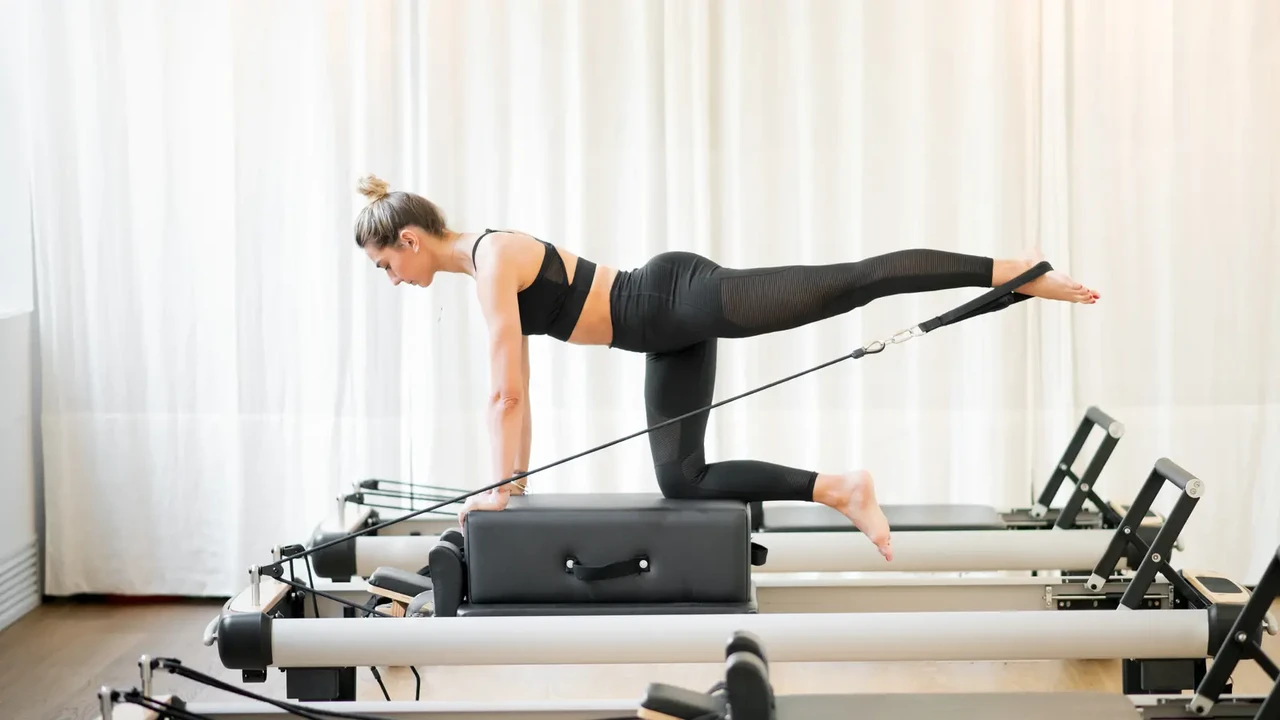
Comparing Resistance Bands and Free Weights
Understand the benefits of resistance bands versus free weights for strength training. Choose the right tools for your workout.
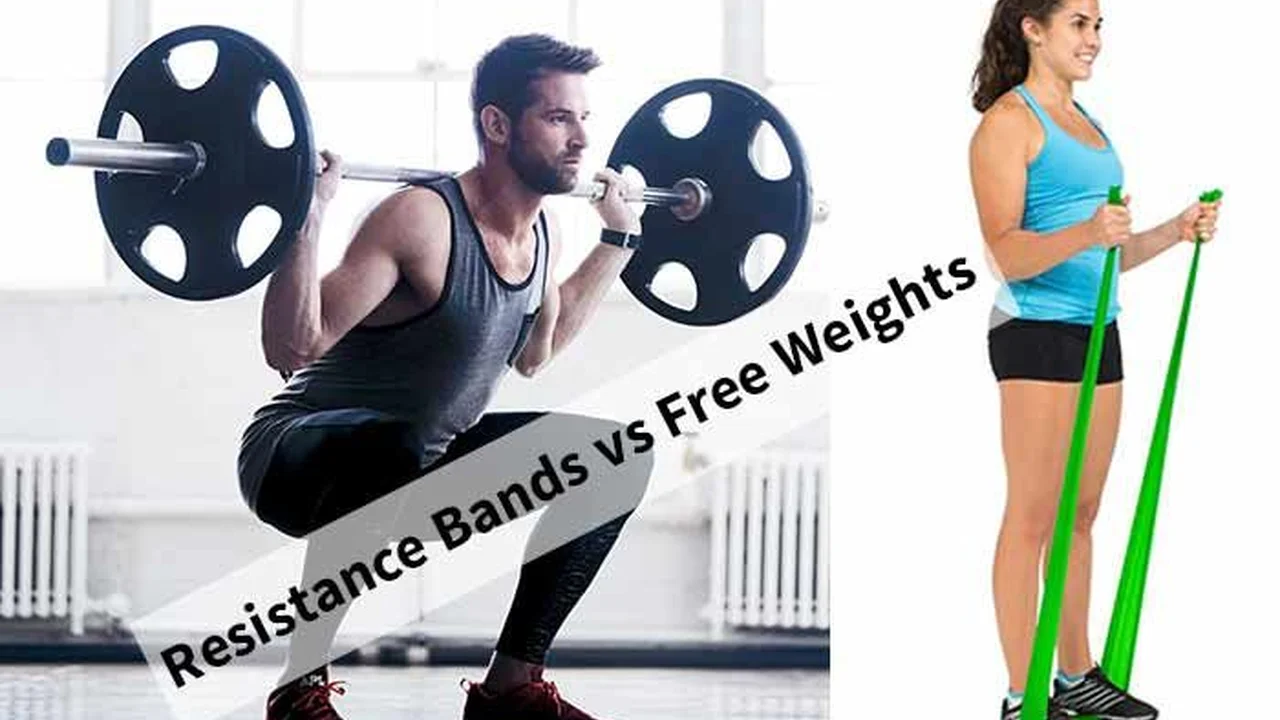
Understand the benefits of resistance bands versus free weights for strength training. Choose the right tools for your workout.
Comparing Resistance Bands and Free Weights
When it comes to building strength, improving fitness, and achieving your physique goals, two popular tools often come to mind: resistance bands and free weights. Both have their unique advantages and disadvantages, and understanding these can help you make an informed decision about which is best for your workout routine, or how to effectively combine them. Let's dive deep into the world of resistance training, comparing these two titans of the gym.
Resistance Bands The Flexible Powerhouses for Strength and Mobility
Resistance bands, often overlooked by traditional lifters, are incredibly versatile and effective tools. They come in various forms, including loop bands, tube bands with handles, and mini bands, each offering different levels of resistance and applications. Their primary appeal lies in their portability, affordability, and the unique type of resistance they provide.
Progressive Resistance and Joint Health with Bands
One of the most significant benefits of resistance bands is their progressive resistance. Unlike free weights, where the load is constant throughout the movement, bands provide increasing tension as they are stretched. This means the muscle works harder at the end of the range of motion, which can be beneficial for muscle activation and hypertrophy. This progressive resistance also makes them gentler on joints, as there's less initial impact compared to lifting heavy free weights. This makes them an excellent choice for rehabilitation, warm-ups, or for individuals with joint issues.
Versatility and Portability for Home and Travel Workouts
Imagine having a full gym that fits into a small bag. That's what resistance bands offer. They are incredibly lightweight and compact, making them perfect for home workouts, travel, or even outdoor training. You can perform a vast array of exercises targeting every major muscle group, from squats and deadlifts to bicep curls and shoulder presses, all with just a few bands. This versatility extends to assisted exercises, like pull-up assistance, and adding resistance to bodyweight movements.
Top Resistance Band Products and Their Applications
- TheraBand Resistance Bands (Loop Bands): These are flat, continuous loops, often color-coded by resistance level. They are excellent for lower body exercises like glute bridges, monster walks, and hip abductions. They are also great for adding resistance to bodyweight squats or push-ups. A set of 3-5 bands typically costs around $15-$30.
- Bodylastics Resistance Bands (Tube Bands with Handles): These sets usually come with multiple tube bands, handles, ankle straps, and a door anchor. They are fantastic for replicating traditional gym exercises like chest presses, rows, and bicep curls. The ability to stack bands allows for a wide range of resistance levels. A good set can range from $40-$80.
- WODFitters Pull Up Assist Bands (Heavy Duty Loop Bands): These thicker, more durable loop bands are primarily used for assisted pull-ups, but they are also excellent for adding significant resistance to squats, deadlifts, and even bench presses. They come in various thicknesses, with prices ranging from $10-$40 per band depending on resistance.
Free Weights The Foundation of Strength and Hypertrophy
Free weights, encompassing dumbbells, barbells, and kettlebells, have been the cornerstone of strength training for centuries. They offer a constant load throughout the movement, forcing your muscles to stabilize and control the weight against gravity. This makes them incredibly effective for building raw strength, muscle mass, and power.
Constant Tension and Overload for Muscle Growth
The constant tension provided by free weights is ideal for progressive overload, a fundamental principle of muscle growth. As you get stronger, you can simply increase the weight, challenging your muscles to adapt and grow. This consistent load also engages more stabilizing muscles, leading to overall greater strength and improved coordination. Exercises like squats, deadlifts, and bench presses with free weights are unparalleled for systemic strength development.
Precision and Measurable Progress in Strength Training
Free weights allow for precise measurement of progress. You know exactly how much weight you're lifting, making it easy to track your strength gains over time. This objective feedback can be highly motivating and helps in structuring progressive training programs. They also allow for a greater range of motion in many exercises compared to machines, promoting functional strength.
Popular Free Weight Products and Their Applications
- Bowflex SelectTech 552 Adjustable Dumbbells: These innovative dumbbells replace multiple sets of traditional dumbbells, saving space and money. They adjust from 5 to 52.5 pounds with a simple dial. Ideal for home gyms where space is a premium. Price: Around $350-$500 for a pair.
- CAP Barbell Olympic 7-Foot Barbell and Weight Plates: For serious strength training, an Olympic barbell and a set of weight plates are essential. This allows for heavy compound lifts like squats, deadlifts, and bench presses. A good quality barbell can cost $100-$200, and weight plates vary widely based on material and weight, but a starter set (300 lbs) might be $300-$500.
- Amazon Basics Cast Iron Kettlebells: Kettlebells are fantastic for dynamic movements, building explosive power, and improving cardiovascular fitness. They are great for swings, snatches, and Turkish get-ups. Prices vary by weight, but a 20lb kettlebell might be $30-$50.
Resistance Bands vs Free Weights A Head-to-Head Comparison for Your Fitness Goals
Now that we've looked at each tool individually, let's compare them directly across several key aspects to help you decide which is best for your specific needs.
Strength Building and Muscle Hypertrophy Potential
For maximal strength building and muscle hypertrophy, free weights generally have an edge. The constant tension and ability to progressively overload with heavier weights make them superior for pushing your limits. However, resistance bands can still build significant muscle, especially for beginners or when used for higher repetitions and time under tension. Combining both can offer the best of both worlds, using bands for warm-ups, accessory work, or to add accommodating resistance to free weight lifts.
Joint Health and Injury Prevention
Resistance bands are often more joint-friendly due to their progressive resistance, which reduces stress at the beginning of a movement. This makes them excellent for individuals recovering from injuries or those with chronic joint pain. Free weights, while effective, require more careful form to prevent injury, especially with heavier loads. However, proper form with free weights can also strengthen supporting muscles and connective tissues, contributing to long-term joint health.
Portability and Convenience for Any Lifestyle
Resistance bands win hands down in terms of portability and convenience. They are perfect for travel, small living spaces, or outdoor workouts. Free weights, especially barbells and heavy dumbbells, require dedicated space and are not easily transportable. If you're looking for a versatile tool you can take anywhere, bands are your go-to.
Cost Effectiveness for Budget Conscious Fitness
Generally, resistance bands are significantly more affordable than a comprehensive set of free weights. A good set of bands can cost less than $100, providing a wide range of resistance. Building a decent free weight collection, especially with adjustable dumbbells or a barbell and plates, can easily run into several hundred dollars, if not more. For budget-conscious individuals, bands offer an excellent entry point into strength training.
Exercise Variety and Functional Movement
Both tools offer a vast array of exercises. Free weights excel in compound movements that mimic real-world actions, building functional strength. Resistance bands, however, can also be used for functional training, especially for rotational movements and exercises that require stabilization in multiple planes. Bands can also be used to add resistance to bodyweight exercises, expanding their utility.
Combining Both for Optimal Results The Hybrid Approach to Fitness
Instead of viewing this as an 'either/or' situation, consider a 'both/and' approach. Resistance bands and free weights are not mutually exclusive; in fact, they complement each other beautifully. Many athletes and fitness enthusiasts use a hybrid approach to maximize their training benefits.
How to Integrate Bands and Weights into Your Routine
- Warm-ups and Activation: Use mini bands for glute activation before squats or deadlifts, or light tube bands for shoulder warm-ups before bench pressing.
- Accommodating Resistance: Attach bands to barbells for exercises like squats or bench presses. This adds increasing resistance as you get to the stronger part of the lift, challenging your muscles throughout the entire range of motion.
- Accessory Work: Use bands for exercises that are difficult to load effectively with free weights, such as face pulls for shoulder health or banded walks for hip stability.
- Finisher Sets: After your main free weight lifts, use bands for high-repetition finisher sets to pump blood into the muscles and increase metabolic stress, aiding hypertrophy.
- Travel and Deload Weeks: When you're traveling or need a lighter deload week, resistance bands can provide an effective workout without the need for heavy equipment.
Ultimately, the best tool for your workout depends on your individual goals, budget, space, and preferences. If you're aiming for maximal strength and muscle mass, free weights are likely your primary choice. If portability, joint health, and progressive resistance are key, resistance bands are invaluable. For the most comprehensive and well-rounded training, integrating both resistance bands and free weights into your routine will provide a powerful synergy, helping you achieve your fitness aspirations more effectively and sustainably.
:max_bytes(150000):strip_icc()/277019-baked-pork-chops-with-cream-of-mushroom-soup-DDMFS-beauty-4x3-BG-7505-5762b731cf30447d9cbbbbbf387beafa.jpg)